
 The data outline a scenario that cannot be overlooked. In 2023 land consumption in Italy reached 72.5 km², rising to almost 84 km² in 2024. At the same time, one quarter of residential buildings was constructed before 1946. The result is a clear trend: the country continues to grow by consuming new land, while a significant share of the existing building stock ages and becomes increasingly exposed to vulnerabilities.
In a country where 94.5% of municipalities are exposed to hydrogeological risks, regeneration first and foremost means prevention. Reducing risk helps stabilise territories, protect communities and infrastructure, and strengthen the economic foundations on which businesses and local systems rely.
Regeneration also has a clear economic dimension. In the construction sector, €1 billion in investment generates more than 15,000 jobs, activating supply chains, capital and employment. This is not only about urban redevelopment but about a concrete driver of economic development.
In this context, the public real estate portfolio represents a decisive lever. In Italy, the State owns 44,000 properties with an estimated value of €62.8 billion. In 2023, interventions worth approximately €1 billion were launched, generating €70 million in savings on passive leases. The plan foresees €4.7 billion in investments by 2026 and annual savings of €147 million starting from 2027.
In a context where reducing land consumption and vulnerabilities has become a priority, this public portfolio is not merely an administrative matter but a matter of economic policy. If properly mapped, regularised and embedded within a clear strategy, it can become a concrete platform for development, capable of attracting capital and generating stable value over time.
The real challenge is not imagining new projects but reducing uncertainty, time and risk. Investments move where opportunities are clear, rules are defined and execution capacity is strong. Regenerating today means transforming what already exists into resilience, competitiveness and long-term value.
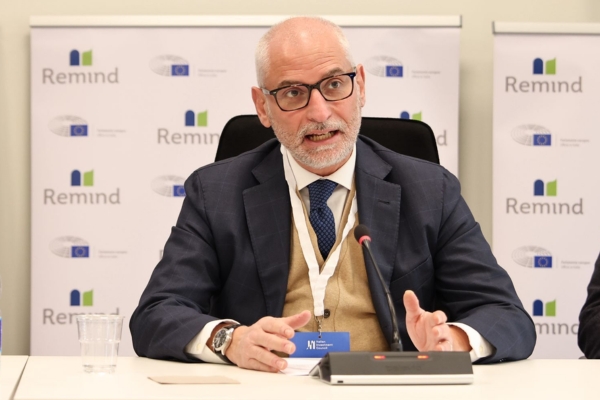
These topics were discussed by Andrea Migliore during the event “Investing Together in the Present and Future of Italy”, organised by Remind, bringing territorial regeneration back to the centre of the debate as a concrete lever for development and stability for the country.


